
Football Standings KQBD At first glance, it’s just a place displaying the teams’ positions, points, goal difference, and number of games played. But for fans, each line of data holds a wealth of stories. A team climbing to the top can thrill the hearts of supporters, while a dramatic drop to the bottom of the table can make the entire season more tense.
When rankings are more than just numbers.

The Football Standings (KQBD) help viewers quickly grasp the overall picture of the tournament. However, behind each position is not just the sum of points, but also form, character, and the very ups and downs of football.
The position on the leaderboard recounts the competition journey.
For football fans, looking at the league table is sometimes like reading a season diary. Every time their team moves up a place, hope is rekindled. Every time they fall behind, anxiety increases. Small changes in the table can spark lengthy conversations, from coffee shops to social media.
The interesting thing is that the table is always in motion. A team might be at the top today but be chased down in the next round. A team that seems to be sinking can still bounce back with an impressive run of matches. It is this volatility that makes football so exciting.
Scores create both pressure and hope.
Points are the most visible aspect, but they’re also the part that causes fans’ emotions to change the fastest. Just one point more can give a huge advantage in the title race, while one point less can put a team in a must-win situation in the next round.
Points also create scenarios. When the gap between teams is very close, every goal becomes valuable. Fans not only watch their own team play, but also secretly follow the results of their rivals. That’s a unique kind of suspense that only the league table can create.
Goal difference makes the race even more intricate.
Goal difference reflects, to some extent, a team’s style. A team that scores many goals may have a strong attack, while a team that concedes few goals often shows a solid defense. Of course, numbers don’t tell the whole story, but they give viewers a better perspective when assessing strength.
Teams in direct competition often pay close attention to goal difference. Therefore, big wins can create a psychological advantage, while unnecessary goals conceded can sometimes have significant consequences at the end of the season. In football, sometimes the difference between victory and defeat is determined by a seemingly insignificant play.
Football fans read the league table with their own emotions.

Football standings (KQBD) not only serve the need for updated information, but also become a place where fans place their expectations. Depending on where their favorite team stands, the same data table can bring joy, excitement, or even very real worry.
The top teams always attract a lot of attention.
Fans of the leading team always feel a mix of joy and worry. Joy because their team is in a good position, but worry because even a single slip-up could narrow the gap. Each round, therefore, becomes a test of character. Truly strong teams not only win when they’re in top form, but also know how to overcome days when they’re not playing well.
The top teams also create highly anticipated matchups. When two direct competitors meet, the standings can change overnight. That’s why fans always look at the pre-match positions and imagine a variety of scenarios after the final whistle.
The mid-table teams are anything but boring.
Many people only look at the top and bottom of the table, but the middle of the table also has its own appeal. This is where teams seek stability, experiment with tactics, or quietly make a breakthrough when opportunities arise. A short winning streak can bring them closer to the higher-ranked teams, while a few consecutive losses can make things uncertain.
For neutral fans, the middle of the table offers many exciting matches. Not every game is heavily promoted, but it can still produce surprises. The beauty of football lies in the fact that sometimes the most captivating story isn’t found at the top.
The bottom group contains a lot of survival drama.
Fans of teams at the bottom of the table often watch the standings with a sense of unease. They’re not only concerned about their team’s win or loss, but also eagerly awaiting the results of their regional rivals. When the gap is only one or two points, every round feels like a mini-final.
This pressure for survival creates many emotional moments. Some teams stage spectacular comebacks, some collapse due to a lack of resilience, and some fight until the very last round. Looking at the bottom teams, fans understand that football isn’t just about glory, but also about the tenacious struggle to stay afloat.
Track the standings more intelligently with each round.
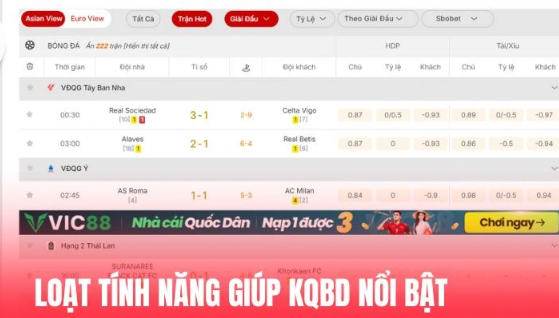
Football standings (KQBD) will be more useful when viewers know how to combine position with form, schedule, and the context of each match. A simple data table can open up insightful perspectives if read with careful observation.
Positions should not be viewed mechanically.
Viewers should also observe the past match schedule. Some teams started the season with a series of matches against strong opponents, so their points total isn’t high yet. Some teams are doing quite well because of an easier schedule, but the real challenge still lies ahead. When considering the league table in context, judgments will be less hasty.
Football always needs time to reveal its true nature. A ranking after a few rounds may only be an initial signal, while the final league table provides a more complete answer. Smart fans know when to be happy and when to worry, but they shouldn’t jump to conclusions too early.
Combine current form to understand trends.
Recent form helps viewers understand whether a team is on an upward or downward trajectory. A team in fifth place with a winning streak might be more noteworthy than a team in third place with inconsistent performance. Therefore, league tables should be read in conjunction with the results, the number of goals scored, and how the team performs on the field.
Viewers should avoid jumping to conclusions based on a single match. A single loss might be an anomaly, but a series of unconvincing results is cause for concern. Reading trends helps football fans remain calmer in the face of fluctuations.
The upcoming schedule will determine many scenarios.
Close-up fans often look at the league table and then the fixture list. They want to know if their team can break through, maintain their position, or prepare for a difficult period. This is a more proactive way of reading football, not just waiting for the results before reacting.
The fixture list also creates a sense of anticipation. Direct confrontations between competing teams in the same region always carry special weight. A well-timed victory can change the league table, while a defeat can derail all plans.
Conclude
Bảng Xếp Hạng Bóng Đá KQBD In the eyes of football fans, the game is both simple and full of emotion because each position tells its own story. When fans can read scores, goal difference, form, and fixtures from a clear-headed perspective, they will follow the season more actively, deeply, and enjoyably.
