Keonhacai – Understanding Football League Tables and Rankings
League tables are among the most familiar features in football. They allow supporters to see which teams are leading a competition, which clubs are fighting for qualification, and which sides may be facing relegation. However, a standings table contains much more information than simply the position number.
What is a football league table?
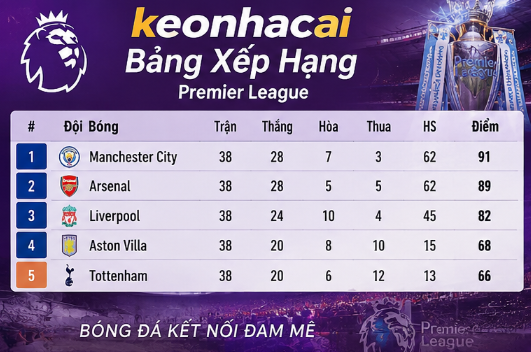
A football league table ranks teams according to the rules of a competition.
keonhacai is associated with football information, where standings can be viewed alongside other match-related data.
Most domestic leagues award three points for a win, one for a draw, and none for a defeat.
However, tie-breaking rules may differ between competitions.
Understanding Bảng Xếp Hạng
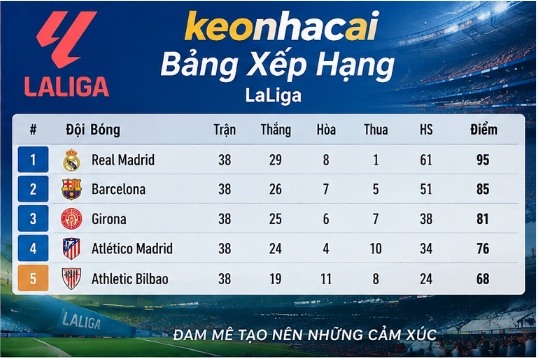
The phraseBảng Xếp Hạng means standings or rankings.
A standard table usually includes games played, wins, draws, losses, goals scored, goals conceded, goal difference, and total points.
Each column provides a different piece of information about a team’s season.
Games played
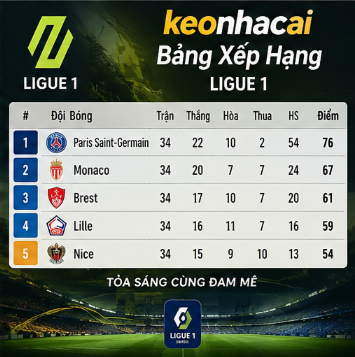
The number of games played is extremely important.
Two clubs may have similar point totals while having completed different numbers of matches.
For example, one team may have 35 points from 18 games while another has 33 from 16.
The second team has games in hand, but those matches represent opportunities rather than guaranteed points.
Wins, draws, and losses
These columns provide a quick overview of how a team has collected its points.
Two clubs can have the same number of points while reaching that total in different ways.
One may have more wins and more defeats, while the other has drawn frequently.
This can offer useful context about playing style and consistency.
Goal difference
Goal difference is calculated by subtracting goals conceded from goals scored.
A team with 40 goals scored and 25 conceded has a goal difference of +15.
This number can be important when teams finish level on points.
However, a few unusually large victories can influence goal difference significantly, so it should not be interpreted in isolation.
Title races
The top of the standings becomes especially important during a close championship race.
A difference of only two or three points can change quickly.
Remaining fixtures, injuries, goal difference, and direct meetings may all influence the final outcome.
The table shows the current situation, not a guarantee of who will finish first.
Qualification places
Many leagues offer qualification for continental competitions.
The number of available places and the rules surrounding them vary by league and season.
Domestic cup results can sometimes affect which positions qualify.
Users should therefore check official competition regulations rather than assuming the same rule applies everywhere.
Relegation battles
The bottom of the table can be just as dramatic as the top.
Teams near the relegation zone may be separated by only a few points.
A single victory can significantly change the standings.
Late-season matches between direct relegation rivals are often particularly important because both sides are competing for the same objective.
Home and away performance
A league table shows overall performance, but home and away records can add valuable context.
Some teams perform significantly better at home.
Others may be more effective away due to tactical style.
Looking at separate home and away tables can help supporters understand why an overall ranking looks the way it does.
Recent form
Many standings pages display recent form beside the table.
A sequence such as W-W-D-L-W summarizes recent results, but context remains important.
The strength of opponents, match locations, injuries, and competition type should all be considered.
Goals scored and conceded
Goal totals can reveal broad patterns.
A team near the top may rely on a strong attack, while another may succeed because of a disciplined defense.
However, raw numbers should be interpreted relative to games played.
Scoring 30 goals in 15 matches is different from scoring 30 in 25.
Points per game
When teams have played different numbers of matches, points per game can provide another perspective.
It is calculated by dividing total points by games played.
This does not replace the official standings but can help users compare teams with uneven schedules.
Standings and betting analysis
League position is often used in betting discussions, but ranking alone cannot predict a result.
A lower-ranked team can defeat a stronger opponent.
Football remains uncertain, and contextual factors can matter significantly.
Anyone using standings as part of betting research should treat them as descriptive data rather than a guarantee.
Updating the table
Standings change after almost every matchday.
Users should therefore pay attention to the update time of the data they are viewing.
During busy rounds, a table can temporarily look unusual because some teams have already played while others have not.
Conclusion
Football standings provide a compact summary of a competition, but reading them effectively requires more than looking at position numbers.
Games played, goal difference, recent form, goals scored, qualification rules, and remaining fixtures all add context.
By using Bảng Xếp Hạng together with fixtures, results, and official competition information, supporters can build a clearer picture of how a season is developing.